

Due Process Cannot Survive If Prosecutors Convict People in Public Before Trial
What happened in Miami on May 20 was not just about Raul Castro or Cuba. It was about whether due process still means anything when the accused is someone Americans have been trained to despise.
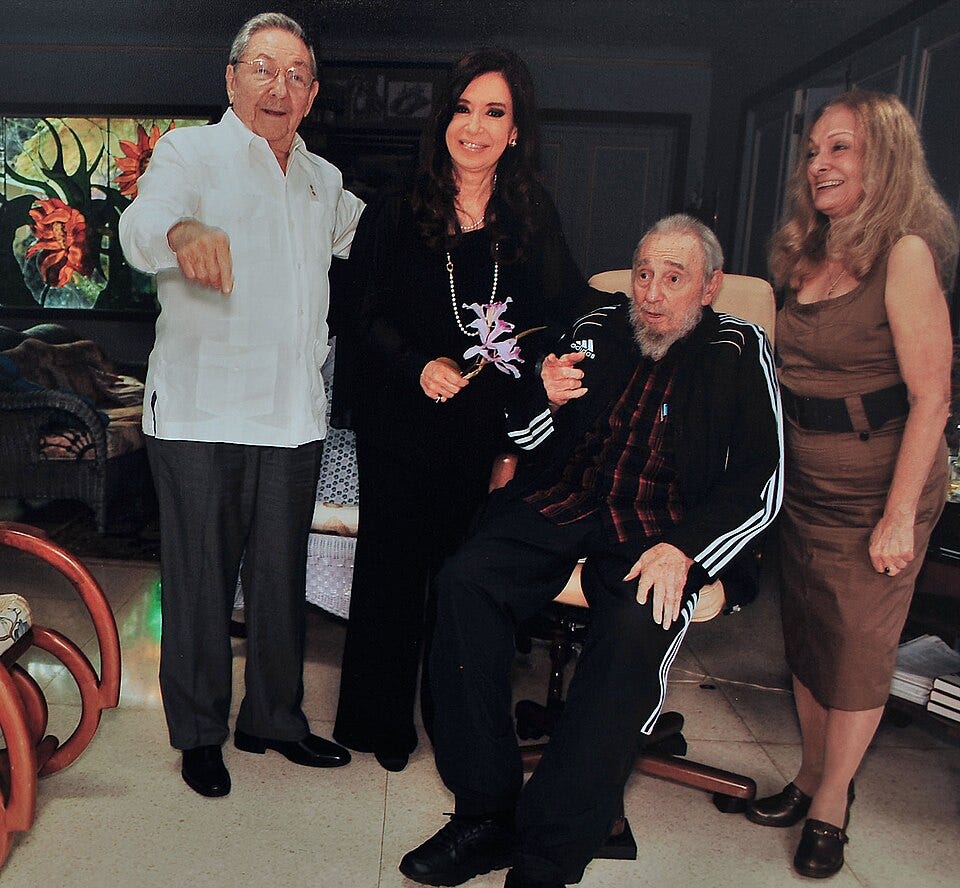
On May 20, 2026, the administration of Donald Trump publicly unsealed federal charges against former Cuban leader Raul Castro over the February 24, 1996 shootdown of two Brothers to the Rescue aircraft that killed four men over the Florida Straits. The story exploded across American media within hours because the deaths themselves have haunted relations between Cuba and the United States for nearly three decades. Four human beings died that day in 1996, civilians flying small planes in international airspace, and their families have carried that loss every single day since. The pain is real. The grief is real. Anybody with any moral seriousness in them should sit for a moment with the weight of what those families have been carrying for thirty years before they say anything else about this case, because the dead deserve that much at minimum, and the living who loved them deserve even more.
But something else happened on May 20 that deserves just as much attention from anyone who still believes the Constitution of the United States is supposed to mean something more than decorative language carved into marble. Before any trial had been held. Before any evidence had been challenged in open court. Before any defense had been presented. Before the slow careful work of due process had been allowed to unfold the way the founders designed it to unfold, some of the most powerful law enforcement officials in the United States stood in front of cameras in Miami and spoke as though the guilt of the accused was already established fact. They did not speak like prosecutors announcing charges that the government would now attempt to prove in court. They spoke like commentators delivering moral verdicts to a national television audience that had already been told what to feel before they were ever given the chance to think.
According to the reporting from Al Jazeera, corroborated by Reuters and other outlets covering the announcement, Acting Attorney General Todd Blanche stood before the press and declared that “four murdered Americans have waited for justice.” FBI Director Kash Patel called the indictment “a major step toward accountability.” Federal prosecutor Jason Reding Quiñones stated publicly that Raul Castro “authorized and oversaw” the military command that resulted in the destruction of civilian aircraft. Read those words carefully and notice what is missing from every one of them. There is no “allegedly.” There is no “is accused of.” There is no “the government will attempt to prove at trial.” The language presented the guilt of the accused as morally settled before a single juror had heard a single piece of evidence. That distinction is not a small one. That distinction is the entire difference between a constitutional republic and the kind of system this country was founded specifically to reject.
An indictment is not a conviction. An indictment is a formal accusation approved by a grand jury under the relatively low standard of probable cause, which means the government has shown there is enough reason to bring the matter to trial. It is not proof beyond a reasonable doubt. It is not a verdict. It is not justice completed or even justice begun. The accused has not yet had the opportunity to challenge the evidence presented against them, to confront the witnesses who will testify, to present their own evidence, to cross-examine the people the government is calling to make its case, or to make any of the procedural challenges that the courtroom exists to allow. That entire process, the slow grinding test of accusations against evidence in front of a neutral judge and a jury of citizens, is the foundation of due process itself, and it is the single most important inheritance the Anglo-American legal tradition has ever passed down to those of us living under it today.
The presumption of innocence did not come to us cheaply. It was built over centuries of struggle against exactly the kind of behavior the world watched on May 20. The Magna Carta in 1215 placed the first stone in that foundation when the English barons forced King John to accept that no free man could be imprisoned or stripped of his rights except by the lawful judgment of his peers and the law of the land. Edward Coke, the great English jurist of the seventeenth century, spent his life arguing that the king himself stood beneath the law, not above it, and that the procedures of justice could not be bent to serve the political convenience of the powerful. William Blackstone, whose Commentaries on the Laws of England shaped the legal thinking of the men who would later write the American Constitution, articulated the famous principle that it is better that ten guilty persons escape than that one innocent suffer, and he meant it as more than a slogan. He meant it as a structural commitment, a recognition that any legal system willing to convict the innocent in order to punish the guilty has already abandoned the moral premise that makes law worth respecting in the first place.
The men who wrote the Fifth and Sixth Amendments to the Constitution of the United States knew all of this history because they had lived through what happens when government power operates without those restraints. They wrote the guarantee of due process into the Fifth Amendment and the guarantees of a speedy public trial, an impartial jury, confrontation of witnesses, and the assistance of counsel into the Sixth Amendment because they understood that the rights protecting the despised today are the same rights protecting the ordinary citizen tomorrow. The Constitution is not a document designed to protect popular defendants. Popular defendants do not need protection. The Constitution is a document designed to protect the unpopular ones, the despised ones, the ones whose guilt seems so obvious to the comfortable majority that nobody can imagine the protections being necessary. That is precisely the moment when those protections matter most, and that is precisely the moment when they are most likely to be violated by men in power who have learned to read the political winds.
Consider what John Adams did in 1770 when the British soldiers who had fired into the crowd at the Boston Massacre needed a defense lawyer, and not a single colonial attorney would touch the case because the political mood of Boston had already convicted them in the streets. Adams took the case. He took it knowing it might destroy his career and his standing in the city he loved. He took it because he understood something most Americans have forgotten, which is that the rule of law has to apply to the despised or it eventually applies to nobody. He stood in court and defended men the entire town wanted to see hanged, and he won acquittals for most of them because the evidence at trial did not support the version of events the political narrative had already established. That is what due process looked like in the founding generation. That is the inheritance we are supposed to be guarding. And every time a prosecutor stands at a podium and announces guilt before trial, every time a federal official treats an indictment as a conviction, every time the public is trained to cheer accusations as though they were verdicts, that inheritance is being chipped away by people who either do not understand what they are damaging or do not care.
The history of the twentieth century should have permanently cured the human species of any temptation to allow show trials in any form. The Soviet Union under Stalin perfected the technique. The verdict was decided in advance by political authorities, the trial itself was theater for the consumption of the public, and the defendants were given the choice between confession and torture. Nazi Germany operated the same way once Hitler consolidated power, with judges instructed to deliver the verdicts the regime required regardless of evidence or law. Every authoritarian regime in modern history has followed the same pattern because the pattern is the point. The form of legal procedure is preserved as a kind of mask, but the substance of legal procedure, the actual testing of evidence in front of a neutral arbiter, is hollowed out from the inside. The public is conditioned to treat accusations as proof, the press cooperates by repeating government claims as established fact, and over time the population stops being able to tell the difference between justice and political punishment.
I am not saying the United States in 2026 is the Soviet Union under Stalin. I am saying that the slow corrosion of constitutional culture happens in exactly this way, one normalized violation at a time, and that the Americans who lived through it rarely noticed it happening because each individual step seemed small compared to the one before. The country watched federal officials sell the war in Iraq in 2003 through certainty, fear, and emotionally charged declarations about weapons of mass destruction that the evidence did not support and that never existed. Powerful men stood at podiums and spoke with the absolute moral confidence of people who knew they were right, and they were not right, and the price of their certainty was paid in something like a million lives across the Middle East over the next twenty years. The lesson from that catastrophe should have permanently inoculated this country against the impulse to trust emotionally loaded government narratives delivered with the full authority of executive power. Instead, the political culture has drifted further in the opposite direction, with each successive administration treating the rule of law as more of a suggestion and the presumption of innocence as more of a technicality.
What concerns me about the Castro indictment is not whether Raul Castro is guilty. The man is ninety-four years old, he led a government that committed serious human rights abuses over decades, and the evidence may well show that he authorized the shootdown of those four civilians in 1996. None of that is the issue. The issue is whether the United States is still a country where the question of his guilt is decided in a courtroom through tested evidence, or whether it is now a country where the question is decided at a press conference through the rhetorical authority of federal officials. Those are two very different countries. One of them is the country described in the Constitution. The other one is the country the Constitution was written to prevent.
The political context surrounding this indictment makes the constitutional question sharper rather than softer. The Al Jazeera reporting noted that the move arrived during a period of growing tension between Washington and Havana and described the indictment itself as one of the sharpest escalations between the United States and Cuba in years. Political analysts quoted in the coverage suggested the indictment may also fit within a broader pressure campaign by the Trump administration against the Cuban government. That possibility does not prove anything one way or the other about the merits of the case, but it does remind us how easily legal processes can become entangled with political objectives when the people running the Department of Justice are also the people running a foreign policy strategy. History shows that this entanglement is the rule rather than the exception, and the founders of this country built the constitutional restraints they built precisely because they understood that prosecutorial power, untethered from procedural discipline, becomes a weapon of state policy rather than an instrument of justice.
The professional rules governing federal prosecutors in the United States, embedded in the Department of Justice’s own internal guidelines and in the rules of professional conduct that govern lawyers in every state, place real limits on what prosecutors are supposed to say in public about pending cases. These limits exist because prosecutorial statements carry the weight of government authority and can prejudice the jury pool, taint the proceedings, and undermine the fairness of the trial before it begins. When the Acting Attorney General of the United States, the Director of the Federal Bureau of Investigation, and the lead federal prosecutor on the case all stand in front of cameras and speak as though the guilt of the accused is already established, they are not just informing the public about charges. They are shaping the public consciousness of the case before any courtroom has had the chance to test what they are claiming. They are leveraging the credibility of their offices to convict a man in the only forum that matters in the modern world, which is the forum of public opinion saturated by television and social media. The legal trial that comes later, if it ever comes, will be performed against a backdrop of public belief that has already been hardened by the very officials who are supposed to be respecting the presumption of innocence.
This is the part that I want to make sure lands with anyone reading this carefully. I am not arguing that what these officials did is necessarily illegal in the narrow technical sense. The Fifth Amendment due process clause governs what the government does to individuals through legal proceedings. The Sixth Amendment governs the conduct of the trial itself. The professional rules for prosecutors are usually enforced through bar discipline and internal Justice Department review, not through criminal prosecution. So a strict legal reading might say that what happened on May 20 falls into a gray zone where the Constitution itself was not directly violated, even if professional ethics rules were stretched or broken. But this is precisely where the more important argument lives. The Constitution depends on a culture of constitutional restraint to function. The actual rules written down on parchment in 1787 and amended in 1791 are only as strong as the willingness of the people operating inside the system to honor the spirit of those rules even when the letter could be evaded. Once that culture of restraint dissolves, the written words on the parchment stop protecting anyone. They become decorative language carved into monuments while power operates however it pleases behind the curtain.
That is why the Castro indictment matters beyond Cuba, beyond the four men who died over the Florida Straits in 1996, beyond the families who have been waiting thirty years for accountability, and beyond the immediate partisan politics of the moment. The real question this incident raises is whether the American constitutional order is still a living set of restraints on government power or whether it has become a collection of slogans recited at appropriate moments while the actual conduct of government drifts toward something the founders would not recognize as legitimate. If federal prosecutors can stand at a podium and pronounce guilt before trial, and the public simply cheers because the accused is somebody most Americans have been trained to despise, then the presumption of innocence has already stopped being a living principle. It has become a phrase repeated in civics textbooks while the operating logic of the system continues moving in the opposite direction.
The men and women who built this republic understood that freedom is fragile in ways most people never want to acknowledge. They knew from the long bitter history of the world that governments which begin by convicting the unpopular before trial almost always end up convicting whoever the government finds inconvenient. They knew that the protections written into the Bill of Rights were not luxuries available only when the accused happened to be sympathetic. They knew that the test of a constitutional culture is what happens when the accused is somebody nobody wants to defend. They knew this because they had lived under a system that did not honor those protections, and they wrote the Constitution specifically to build something different. We are the inheritors of what they built. We are also, every single one of us, the ones responsible for whether what they built survives our generation or collapses on our watch.
Raul Castro will have his day in court if the case ever reaches a courtroom, which given his age and his location in Cuba is by no means certain. Whatever happens in that proceeding, if it happens, will be one moment in a long history of cases that have tested the American commitment to due process. But the larger question of whether prosecutors can publicly convict before trial, whether federal officials can leverage the authority of their offices to shape public belief about pending cases, whether the constitutional culture this country inherited from centuries of struggle is still strong enough to restrain the impulse to skip the slow careful work of justice in favor of the fast satisfying performance of moral certainty, that question is being answered every single day in a thousand small moments that nobody pays much attention to. May 20 was one of those moments. The country should pay attention to it. The country should remember it. And the country should ask itself, honestly, whether it is willing to keep watching the inheritance of due process erode one normalized violation at a time, or whether it is finally ready to demand that those who hold the power of the state honor the restraints that make the state legitimate in the first place. Because once those restraints are gone, they do not come back easily, and the country that emerges on the other side of their absence is not the country the founders tried to leave us. It is something else entirely, and the people living inside it usually do not realize what they have lost until it is far too late to recover.
Photo: Wikimedia - The Castros